A booking is a job that is already yours. It is the same record as the enquiry it came from, with the same id, the same portal link and the same history: only the type changes, and it never changes back. Bookings get their own board under Bookings.
Open bookings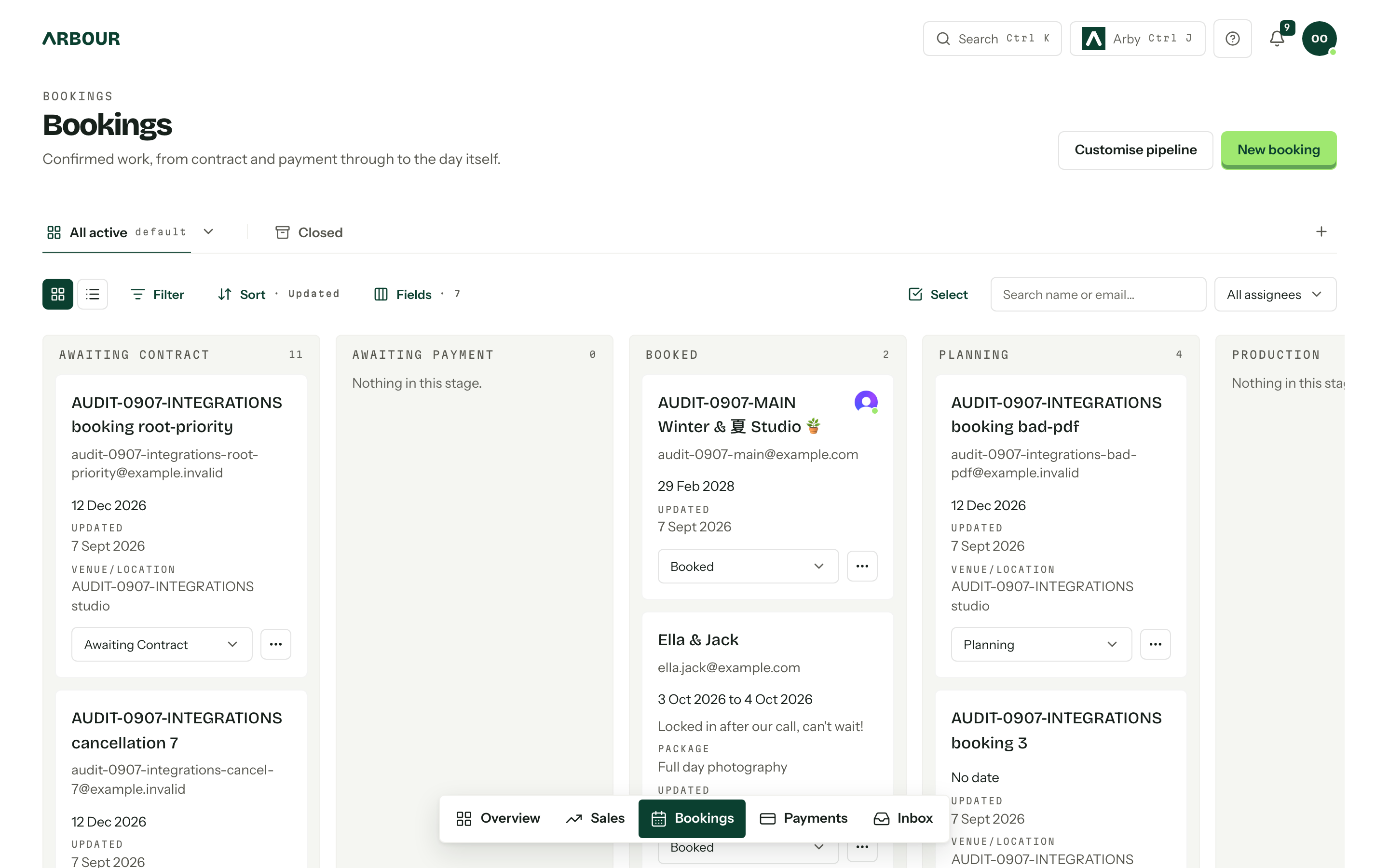
How a booking starts
Three ways in, all landing on the same board.
- 01
A client accepts a quote in their portal. The enquiry converts on the spot, into the first stage of your booking pipeline.
- 02
You convert it yourself. Convert to booking on an enquiry asks which Booking stage it lands in and does the rest.
- 03
You skip the pipeline entirely. New booking takes an Event date, a stage, a primary contact and any custom fields, for work that arrived by phone or at a fair.
The board splits into All active and Closed, with the same views, filters, sort, fields and layout controls the enquiry board has. Enquiries covers those.
Stages and outcomes
Stages are yours to arrange under Customise pipeline. A new organisation starts with Awaiting Contract, Awaiting Payment and Booked, then the fulfilment stages for your trade: a photographer gets Planning, Production, Editing and Delivery. Drag a card between columns, or use the stage select on the card itself.
A booking closes one of two ways: Mark Completed or Mark Cancelled. Cancelling offers an optional reason, kept in the console and never shown to the client. Either way the card keeps its stage and moves to the Closed tab, so Reopen puts it back exactly where it was. Lost belongs to enquiries; a booking never gets it.
Closing is reversible; deleting is not. Delete booking sits at the bottom of a card's actions menu (and a row's menu in the list layout) for roles that hold the delete permission, and takes the whole record with it. Several at once go through Select and the selection bar's Delete button.
Won means booked, not finished
Reporting counts a booking as won the moment it exists. Completing or cancelling it later does not take it back out of that number. Reports can attribute the win to the day the sale landed or to the event date itself.
The booking page
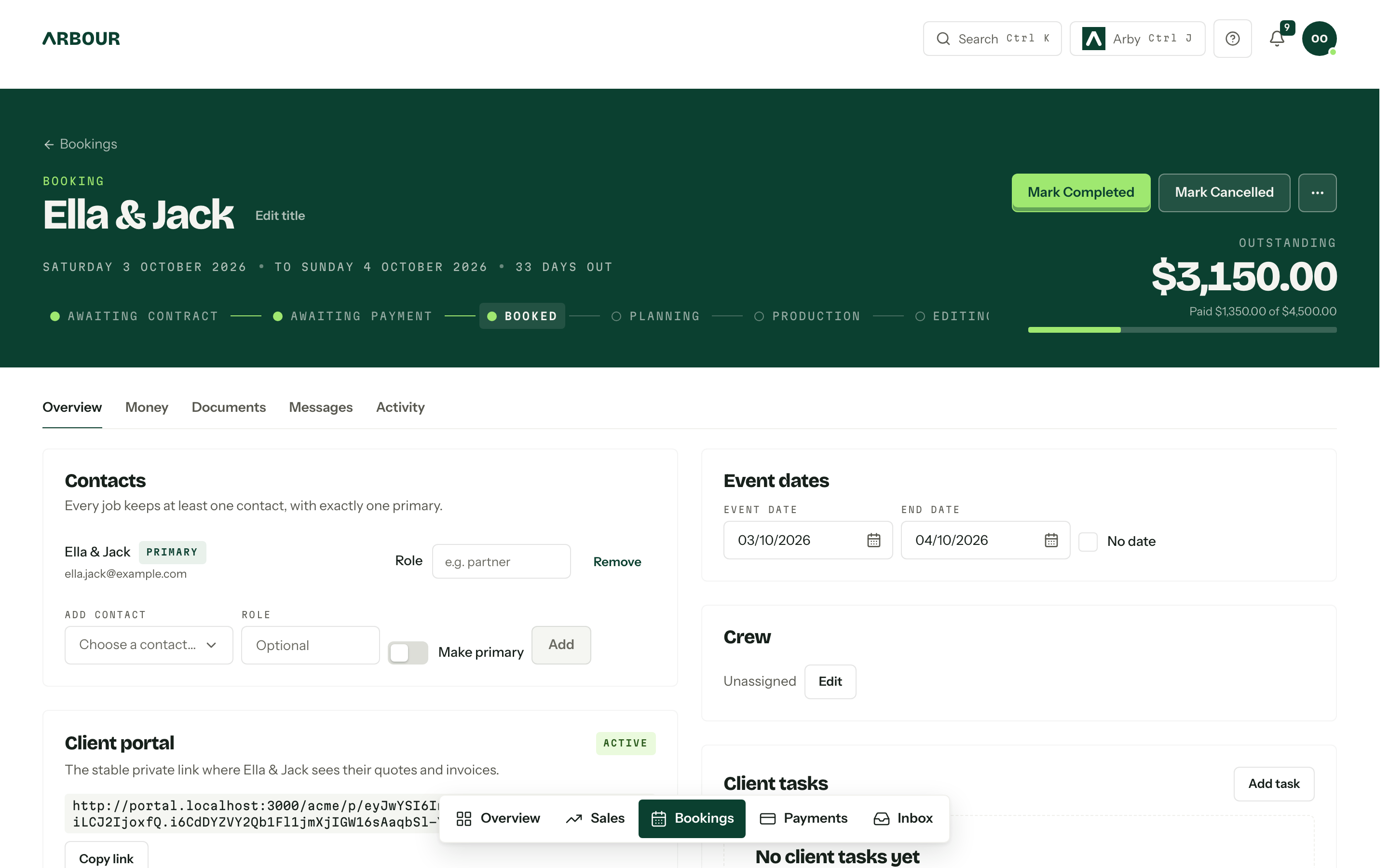
The dark band at the top carries the title, the date line with a countdown, the stage stepper and the outstanding balance. The action row ends with More actions, an ellipsis holding Delete booking. Below it, tabs keep one thing on screen at a time.
- Overview: Contacts, Crew, Event dates, Client portal, your custom fields and any unsent drafts.
- Money: accepted, invoiced, paid and outstanding, with the quotes and invoices behind them.
- Documents: the contract, and Questionnaires.
- Day of: the run sheet. It appears only once run sheets are switched on and the booking has a date.
- Activity: everything that has happened, plus the notes and calls you log.
Event dates are one inclusive range: an Event date, an optional End date, or No date. Equal dates mean a single day. That range drives the calendar, payment deadlines and whether a run sheet is possible at all.
Crew is the assignee list. Edit opens the member picker. Assigning someone who already has work on those dates raises a warning rather than blocking you.
Who can do what
Viewing needs View enquiries and bookings. Without View all enquiries and bookings a member sees only the jobs they are assigned to, and the board says so above the columns. Creating, moving and closing need Edit, move and close enquiries and bookings, changing the crew needs Assign members to enquiries and bookings, and rearranging stages needs Manage pipeline stages and automations. Deleting needs Delete enquiries and bookings, which a role cannot hold without the edit permission. A delete is permanent and takes everything on the booking with it, including the client's portal messages and their tasks, the run sheet, files and activity, and the portal link itself. Contacts and email conversations stay. Financial history stops a delete: an issued invoice, a payment that is not failed or expired (pending and processing count), or a contract sent for signing each hold the booking in place until they are dealt with. See Team and roles.