Enquiries is the sales half of the pipeline: everyone who has asked about your work, from first contact to quote. It opens on a board, one column per stage, one card per open enquiry.
Open enquiries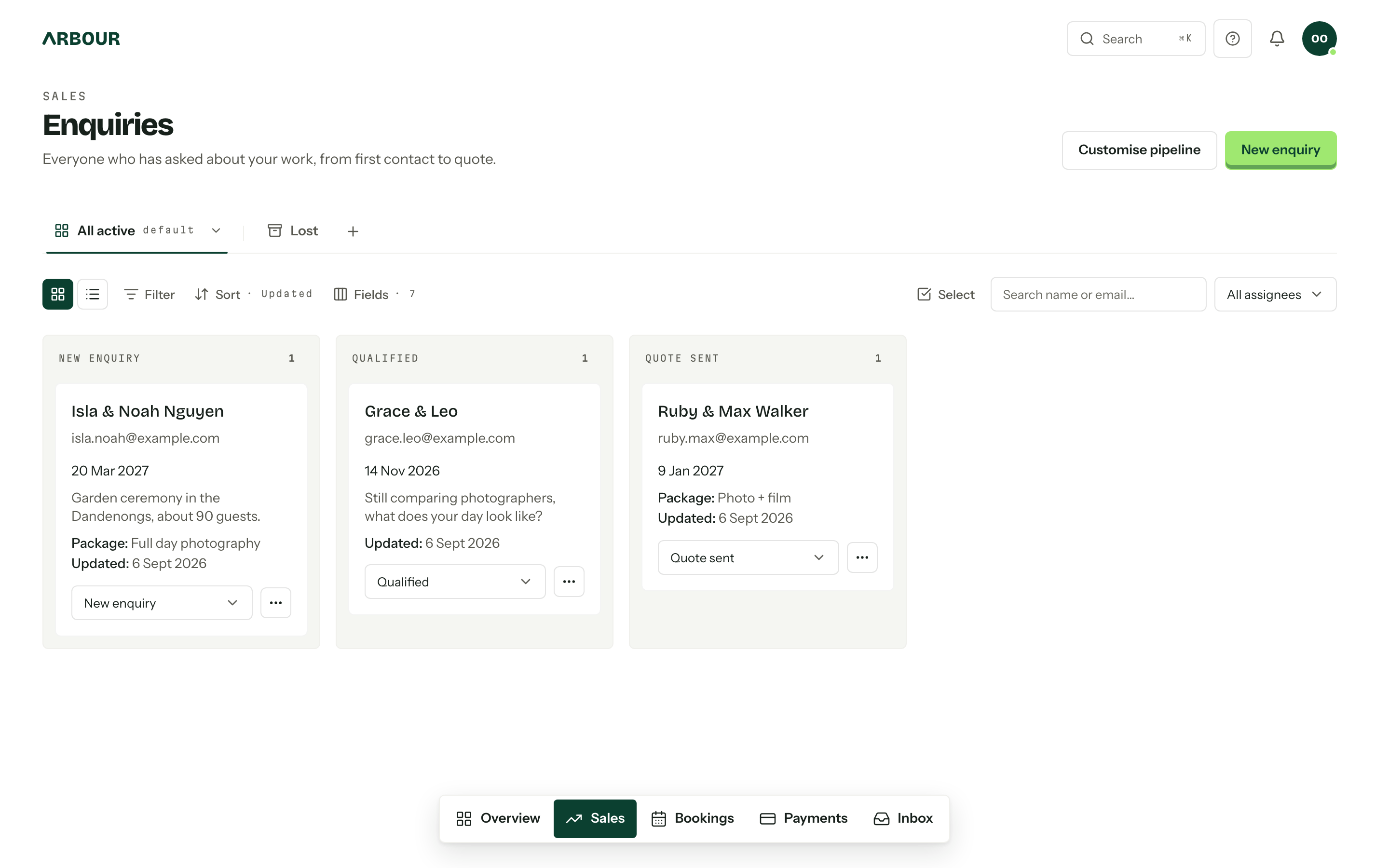
Stages
A new organisation starts with three: New enquiry, Qualified and Quote sent. Each column header carries the stage name and a count of what is sitting in it. Drag a card across to move it, or use the stage picker at the foot of the card when a drag is awkward. The order cards are dragged into is shared, so the whole team sees the same board.
Customise pipeline renames, reorders, adds and removes stages. Changes apply to everyone straight away, and deleting a stage asks where its cards should land first. The button only appears for members who can manage pipeline stages and automations.
Views, filters and search
The tabs above the board are views. All active and the closed tab (Lost for enquiries, unless the outcome has been relabelled) are built in. Everything else is yours: views are personal, and only you see them and their names. The + button starts one blank or duplicates what is on screen, and the chevron on the selected tab renames it, sets it as your default or deletes it. Deleting a view never touches the enquiries in it.
Under the tabs is the bar that shapes the view. Filter builds conditions on stage, outcome, assignee and any custom field. Sort picks a column and a direction, or manual order. Fields chooses the columns, which double as the rows on each board card. The two icons on the left switch between the board and a list; the list groups by stage and its rows drag into order while the view sorts manually.
Quick search on the right narrows what is on screen by name or email as you type. It is transient and never saved onto the view. Beside it, an assignee filter (Mine, Unassigned, or a particular person) shows for members who can see everyone's work. Without that permission the board is your own enquiries, and it says so.
Log one by hand
Website enquiries arrive on their own. For the ones that come by phone, or at a wedding fair:
- 01Press New enquiry.
- 02Set the Event date, or tick No date if nothing is settled yet.
- 03
Fill in the primary contact, either New person or From contacts. Add secondary client covers the partner.
- 04Press Create. The enquiry opens on its own page.
Title (optional) is there if a job wants its own name. Left empty, it reads as the linked contacts.
Assign, convert, close
Assignees are picked in the create dialog and edited on the enquiry itself. Cards show the avatars, they do not change them. Assigning is its own permission.
Convert to booking, in a card's actions menu, asks for a Booking stage and moves the record over. It keeps its portal link, quote and history, and it leaves this board for Bookings.
Mark Lost, in the same menu, closes an enquiry. Reason (optional) stays in the console and is never shown to the client. The card leaves the board and keeps its stage, so Reopen under the Lost tab puts it straight back where it was.
Delete enquiry, at the bottom of that menu (and of a row's menu in the list layout), is permanent: the enquiry and everything on it go, with no archive and no undo. It shows only to roles holding the delete permission, and the dialog names anything that stops it before you confirm. To delete several at once, use Select and the Delete button on the selection bar.
Converting is one way
A booking cannot be turned back into an enquiry. If a job falls over after it converts, close the booking as cancelled rather than looking for an undo.
Who can do what
Viewing, creating, assigning, editing (which covers moving, closing and converting) and deleting are five separate permissions, so a role can hold some without the rest, though deleting always needs editing alongside it. Someone without the wider view permission sees only what is assigned to them. Deleting is permanent and takes the whole record with it, including the client's portal messages and their tasks, the quotes, invoices, questionnaires, files and activity. An enquiry carrying an issued invoice, a payment that is not failed or expired, or a contract sent for signing cannot be deleted at all. See Team and roles.