Team is one job across two tabs. Members is who belongs to this organisation, Roles is what each role lets them do. Both live under Team in Settings.
Open members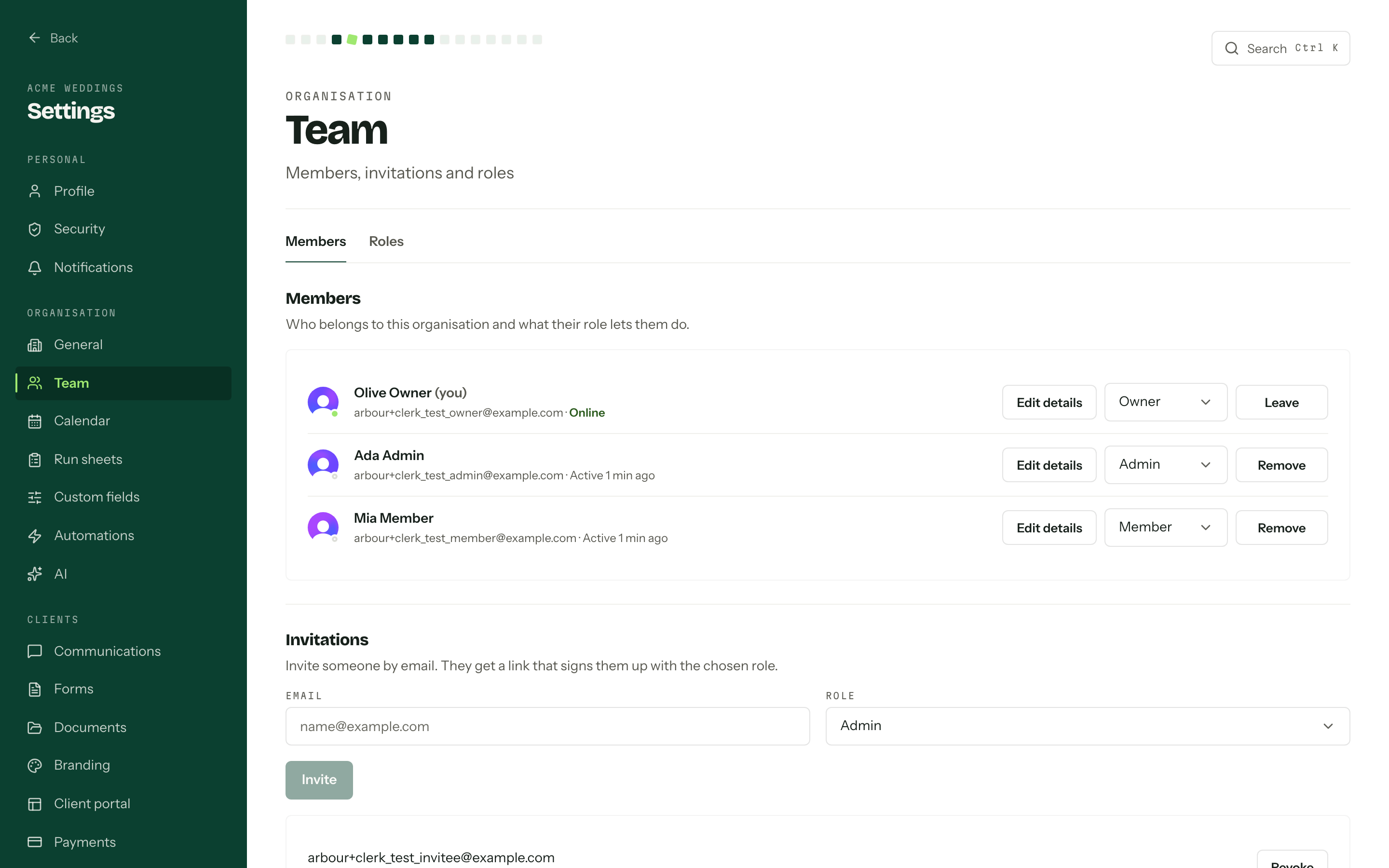
Invite someone
- 01Under Invitations, type an address into Email and pick a Role.
- 02Press Invite. They get a link that signs them up with that role.
Pending invitations sit in a list underneath with the role and the expiry date. An invitation lasts seven days, then the row says expired and carries an Expired badge. There is no resend: Revoke the old one and invite the address again, which issues a fresh link and a fresh week.
The whole section only appears for a role holding Invite members. Only an owner can invite someone straight into the Owner role.
Change a role, or remove someone
Every member row has a role selector and a Save role button beside it. Pick the new role, press Save role. Nothing changes until you do.
Remove takes someone out of the organisation straight away. On your own row the button reads Leave instead, and it asks first, because you lose access until somebody invites you back. Both take the Manage members permission, except leaving, which is always yours.
Member details
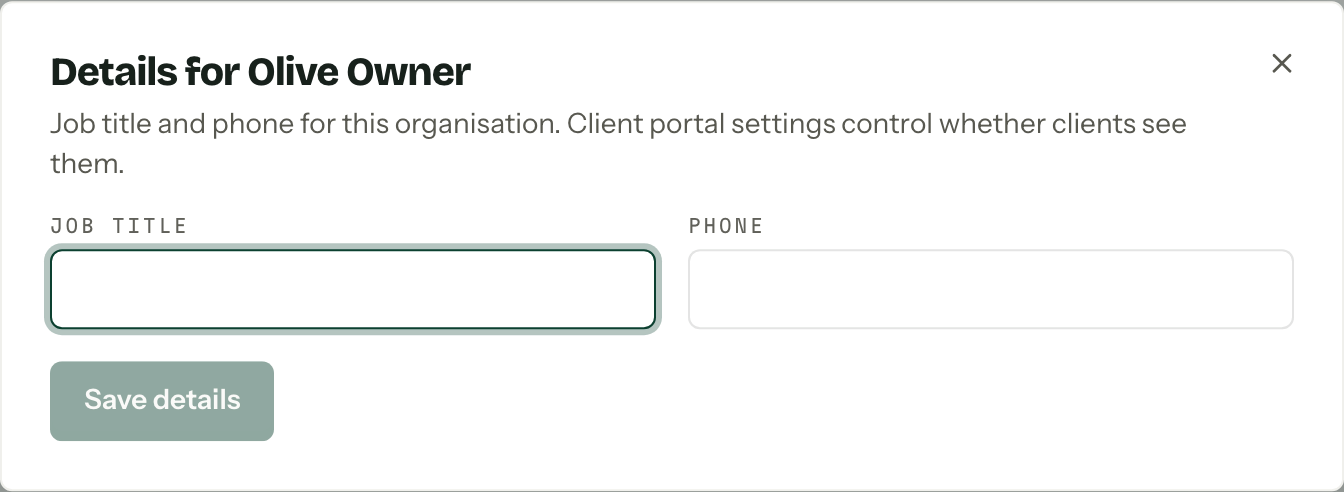
Members can have a Job title and Phone for this organisation. An admin with Manage members can open Edit details in the member row, change either field and press Save details. Each member can also edit their own in Profile, under Your details in this organisation.
When assigned staff are shown in the client portal, the card includes the member's name, picture and job title. Email and phone are only shown when their separate switches are on in Client portal settings.
Roles
Open roles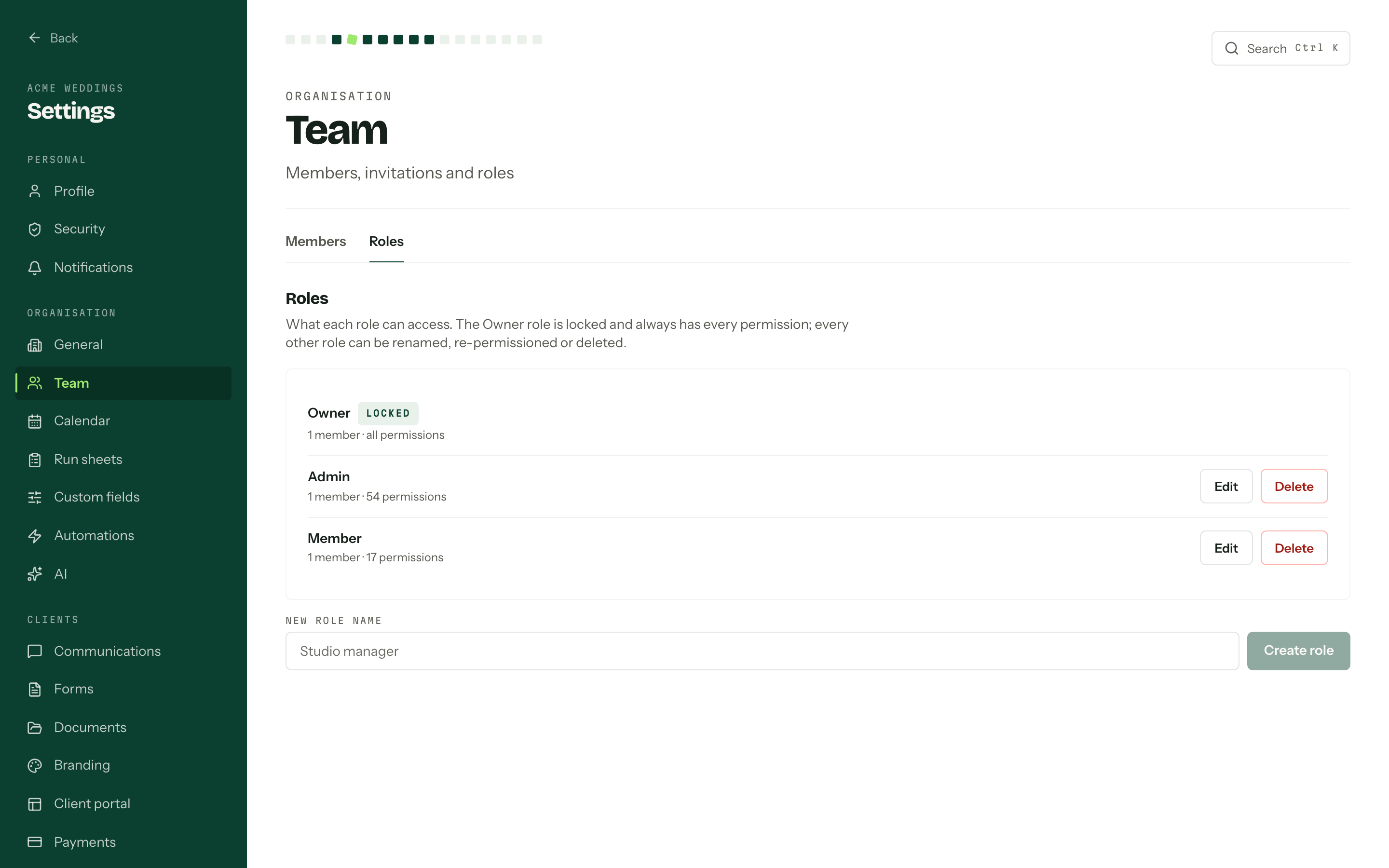
Every organisation starts with three:
| Role | What it holds |
|---|---|
| Owner | Everything, including permissions that do not exist yet. Locked. |
| Admin | Every permission in the registry, as a normal editable role. |
| Member | Day-to-day work: contacts, enquiries and bookings, run sheets, quotes, seeing payments, questionnaires, the AI assistant, portal messages and viewing branding. |
Admin and Member are ordinary rows. Rename them, re-permission them, delete them, or type a name into the box at the foot of the list and press Create role to add your own. A new role starts with nothing ticked and opens straight into its editor. Edit opens an existing one. Delete asks first, and it only goes through on a role nobody is using: move the members onto another role and revoke any invitation that names it, or the delete comes back asking you to.
Everything on this tab takes the Manage roles permission. Picking the permissions themselves is Permissions reference.
The Owner role is different
It is matched by a flag rather than by its name, so it cannot be renamed, deleted, or edited: the editor opens read-only, badged Locked. Owner authority only moves between owners, so promoting someone into the role or demoting them out of it takes an owner doing it in person. And an organisation always keeps at least one owner, whichever way you approach the last one.
Seats
How many people you can have is a question for the plan, not the role.
| Plan | Distinct people |
|---|---|
| Solo | 1, so invitations are switched off |
| Studio | 8 |
| House | unlimited |
The count is the distinct people across every organisation on the account, plus pending invitations to addresses that are not already one of them. Account owners who hold no membership are not counted. On Solo the Invite button is replaced by a line pointing at the Studio plan, and past the Studio limit the API refuses with the plan's own figure. See Plans and billing.