The calendar holds everything with a date on it: enquiries, bookings and time nobody is available. It reads the same records the boards do, so there is no second diary to keep in step.
Open the calendar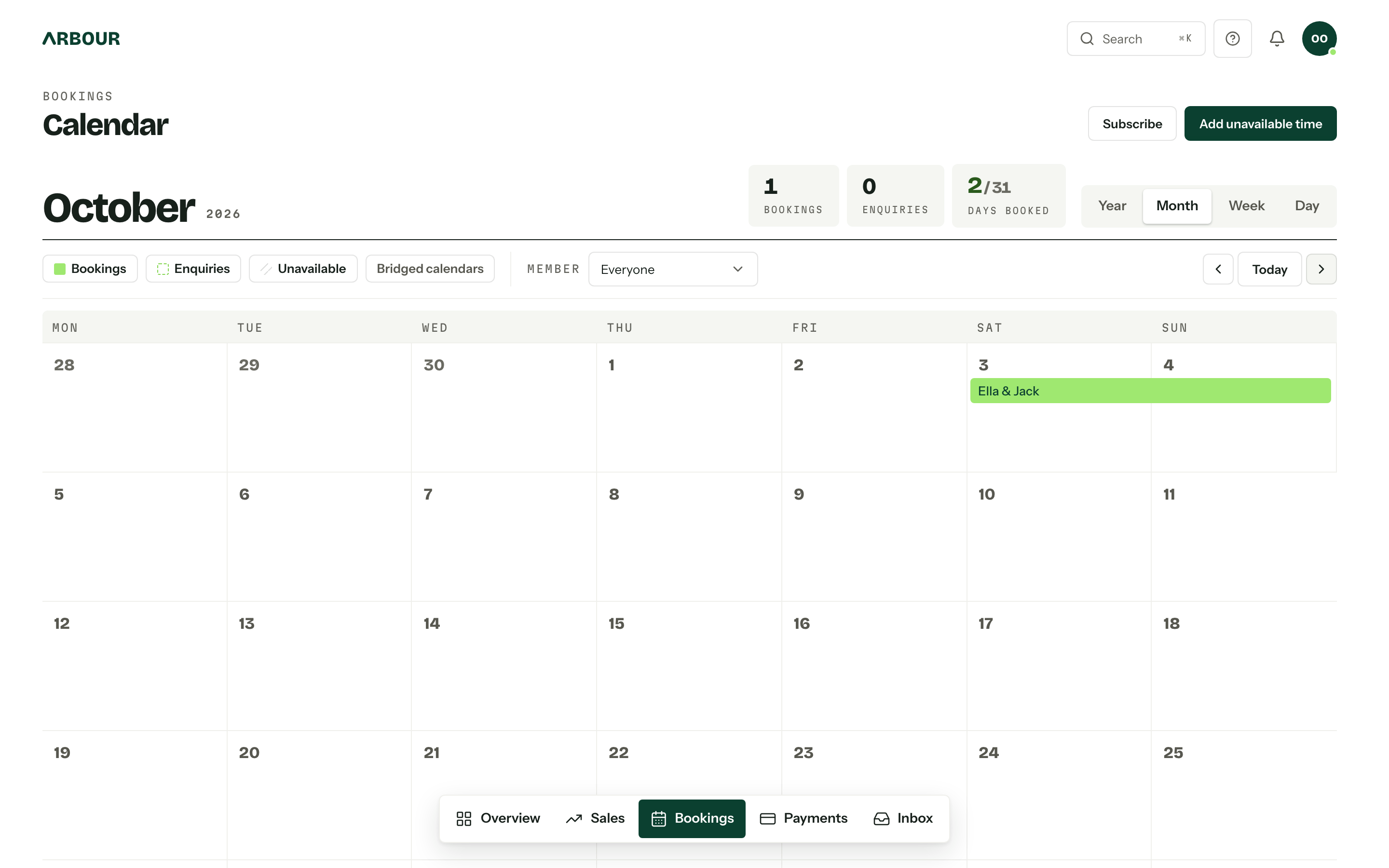
What is on it
Three kinds of bar, each with a toggle above the grid that doubles as the legend.
| Bar | What it is |
|---|---|
| Bookings | Confirmed jobs, filled in |
| Enquiries | Enquiries carrying an event date, drawn as a dashed outline |
| Unavailable | Leave, travel, a day you are second shooting, yours or anyone else's |
Ranges are inclusive, so a two-day job draws a bar across both days. Closed records fade to grey with a strike through the name, and whether they appear at all is a calendar setting. Click an enquiry or booking for a peek (dates, stage, who is on it) with an Open button. Click an unavailable bar to edit it.
The Member picker narrows the grid to one person's work, or to Unassigned records. Organisation-wide unavailable entries stay whoever is picked; Everyone puts it back.
Getting around
Year, Month, Week and Day switch the view, and Previous, Today and Next sit on the right beside the switcher, moving by whatever you are looking at. Whatever period you are on sits large on the left. The year is twelve small months, every day a square coloured by the strongest thing on it: a booking beats a hold, which beats an enquiry, which beats unavailable time. Click a month name to open that month, or a day to open its run sheet. The week is the same seven columns with room for every bar, and the day is a run sheet, one row per record. Weeks start on Monday, and a day carrying more than three bars tucks the rest behind + N more, which opens that day's run sheet. Three counts sit in the toolbar: bookings, enquiries, and how many days of the period are booked.
Blocking out a date
Time you cannot work is an Unavailable entry. Add unavailable time in the header opens the editor, and so does clicking an empty day, which prefills the date.
Block out a date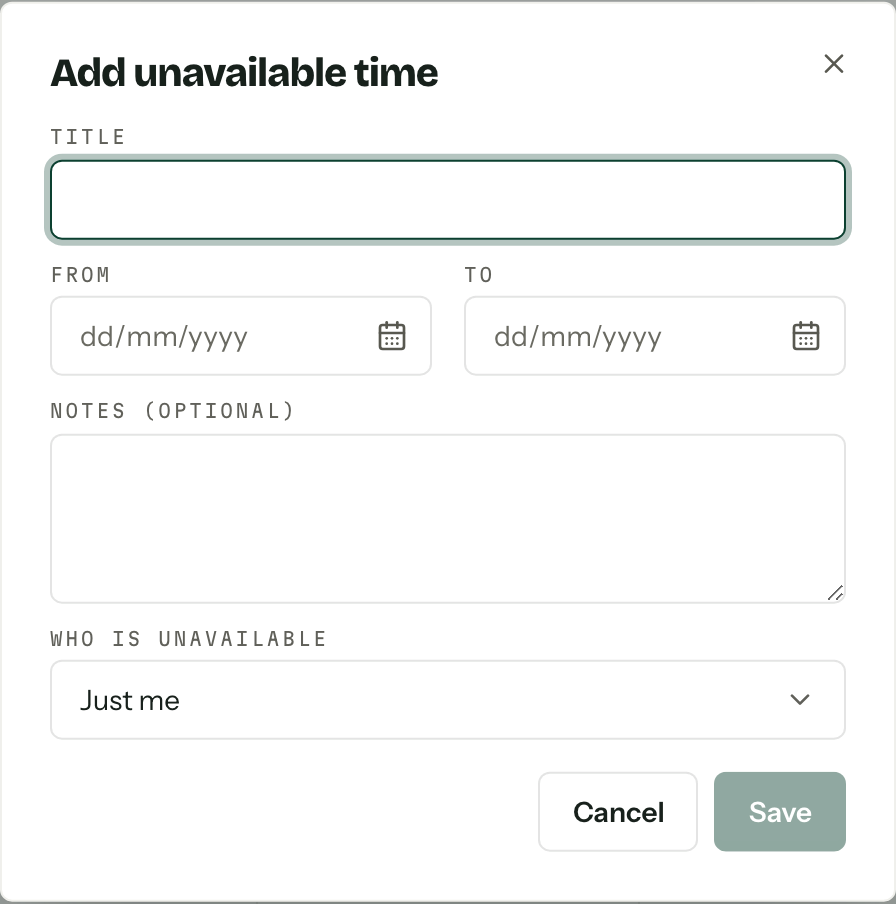
- 01
Give it a Title, then a From and a To date. A single day is the same date twice.
- 02
Add Notes (optional) if the reason matters to anyone else. Everyone in the organisation can read both.
- 03
Choose Who is unavailable: Just me, Whole organisation, or a named member.
Everyone can block out their own time, no permission required. Who is unavailable only appears for a role holding Manage anyone's unavailability, and without it someone else's entry opens read-only.
Saving can raise a warning: a member is already unavailable, or there is assigned work in that period. They are advice, not a stop sign, and Dismiss clears them.
Capacity is not shown here
Daily capacity and the availability bands in calendar settings decide what an enquirer is told when they pick a date on your form. The grid itself shows bars and nothing else.
Taking it with you
Subscribe hands out iCalendar links for your enquiries, bookings and busy time, ready to paste into Google Calendar, Outlook, Apple Calendar or anything that reads a URL. It goes one way: Arbour stays the source of truth, and providers refresh subscribed calendars on their own schedule, which can take a day.
Bridged calendars is a different thing entirely. If you belong to more than one organisation in Arbour, it overlays their dates here in lilac, prefixed with the organisation's name. It is personal: nobody else sees your overlay, in either organisation.