Contacts is everyone your organisation has dealt with, one person per contact. Couples are two records, not one, which is what lets each of them have their own email address and their own history.
Open contacts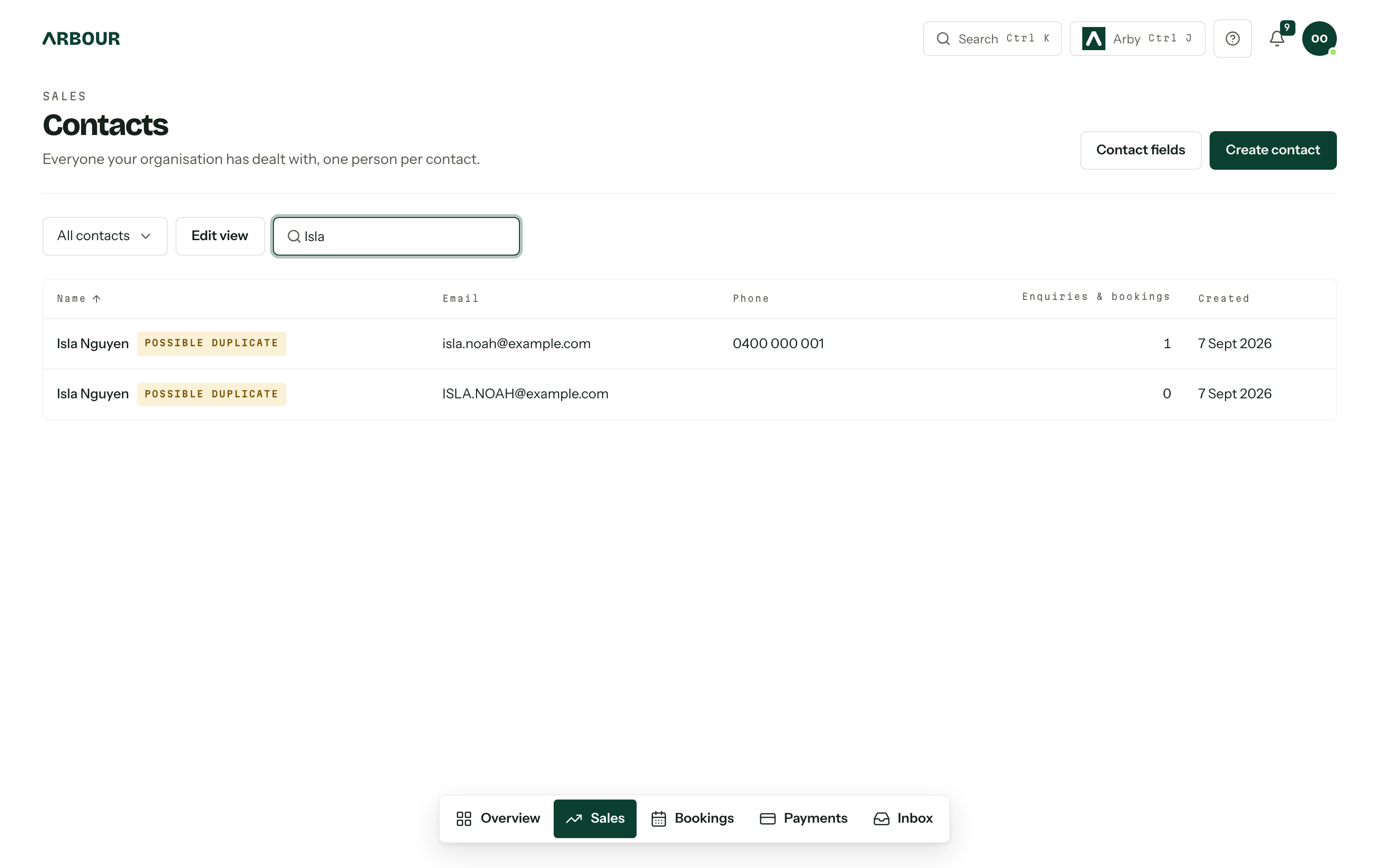
The list
Out of the box the table shows name, email, phone, a count of enquiries and bookings, whether the record looks like a duplicate, and when it was added. Quick search narrows it by name, email or phone.
Everything else about the table is a view. The picker starts on All contacts; Edit view opens the editor, where Columns ticks what shows, Filters narrows by any column or custom field, and Sort orders the result. Run tries the draft without keeping it, and the list badges itself Unsaved view while you do. Save as new keeps it, Update view overwrites the one you are on, and Set as default makes it what you land on. Deleting a view leaves the contacts in it alone.
Add a contact
Contacts appear on their own whenever an enquiry arrives. To add one yourself:
- 01Press Create contact.
- 02Fill in at least a First name. Everything else, including the email, can wait.
- 03Fill in any custom fields that apply, then press Create contact.
If the email you type already belongs to someone, the dialog says so and links to them. It never blocks the save: sometimes two people really do share an address.
What a contact holds
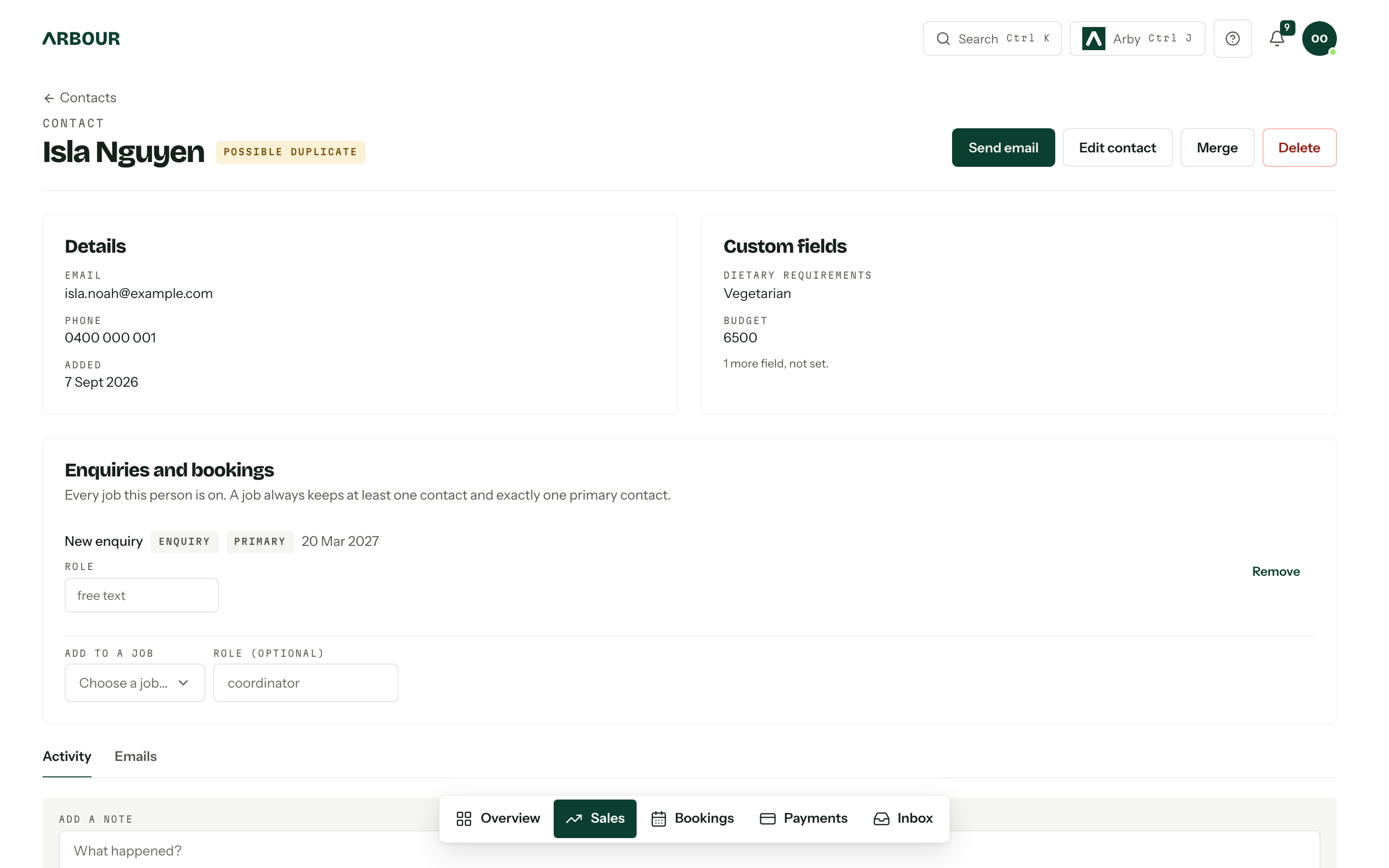
Details carries the email, phone and the date added. Custom fields carries your organisation's own, which are set up in Custom fields.
Enquiries and bookings lists every job this person is on. Each row takes a free-text role, and Make primary or Remove changes their standing on that job. Add to a job puts them on another one. Because a job always keeps exactly one primary contact, removing a primary asks for a replacement first.
Below that sit two tabs. Activity is the feed: your notes, plus a running system record of what changed and when the contact joined or left a job. Add a note logs one against whatever time you choose. Emails lists the conversations linked to this person, and drafts you have not sent. Both feeds fill as the mailbox syncs, so a new organisation sees them empty. See Inbox.
The buttons across the top are Send email, Edit contact, Merge and Delete. Editing saves the details and the custom fields together, and an empty field clears the value.
Deleting
Deleting needs its own permission, and only a signed-in person can do it. It is also blocked while the contact is on any enquiry or booking: the dialog lists them and asks you to take the person off each one first.
A delete erases the details, custom field values, notes and history. Email conversations stay, because they are your organisation's record rather than the contact's. If the goal is to tidy up two records of the same person, merge them instead of deleting one.
Not everyone sees the whole book
View contacts opens the screen. View all contacts decides how much of it fills up. Without the second, a member sees the contacts they created plus the ones on jobs assigned to them, and the rest is invisible, counts included.
Who can do what
Viewing, creating, editing, deleting and merging are five separate permissions, and the default member role holds the first three. See Team and roles.