Two things happen before the console is any use. The wizard at Onboarding creates the account, the first organisation and your Owner membership. The setup checklist then walks an owner through the settings a working business needs: payment details, the enquiry form, packages, branding, templates.
Open setupThe wizard
Three steps, and nothing is written until the last button. Abandon it halfway and there is nothing to clean up.
- 01
The business. The Business name is what clients see. The Portal URL follows it and is checked as you type, so a name someone else has taken is caught here rather than at the end. Under And what do you do on a Saturday?, pick the main service first: that pick sets the words the console uses for clients and jobs, and the rail beside the form shows what changes.
- 02
The team. An email address and a role, Admin or Member, up to seven of them. Add another for a row, Skip for now to move on. Invitations can wait; the team settings do the same job later.
- 03
The plan. Monthly or annual (annual saves two months), then Solo or Studio. Solo is one person by definition, so it greys out the moment there is an invitation on the step before. Billed to is the name on your tax invoices, and it follows the business name unless you change it.
Start 14-day free trial takes no card. Subscribe now attaches one and the subscription renews itself when the trial ends. The trial is one per person, ever: if you have used one, the only button is Add payment details to start. See Plans and billing.
The setup checklist
Once you are in, the overview carries a Getting set up card at the top of the rail with a progress bar and a button into the checklist. It stays there until every step is done. Ten steps, in this order:
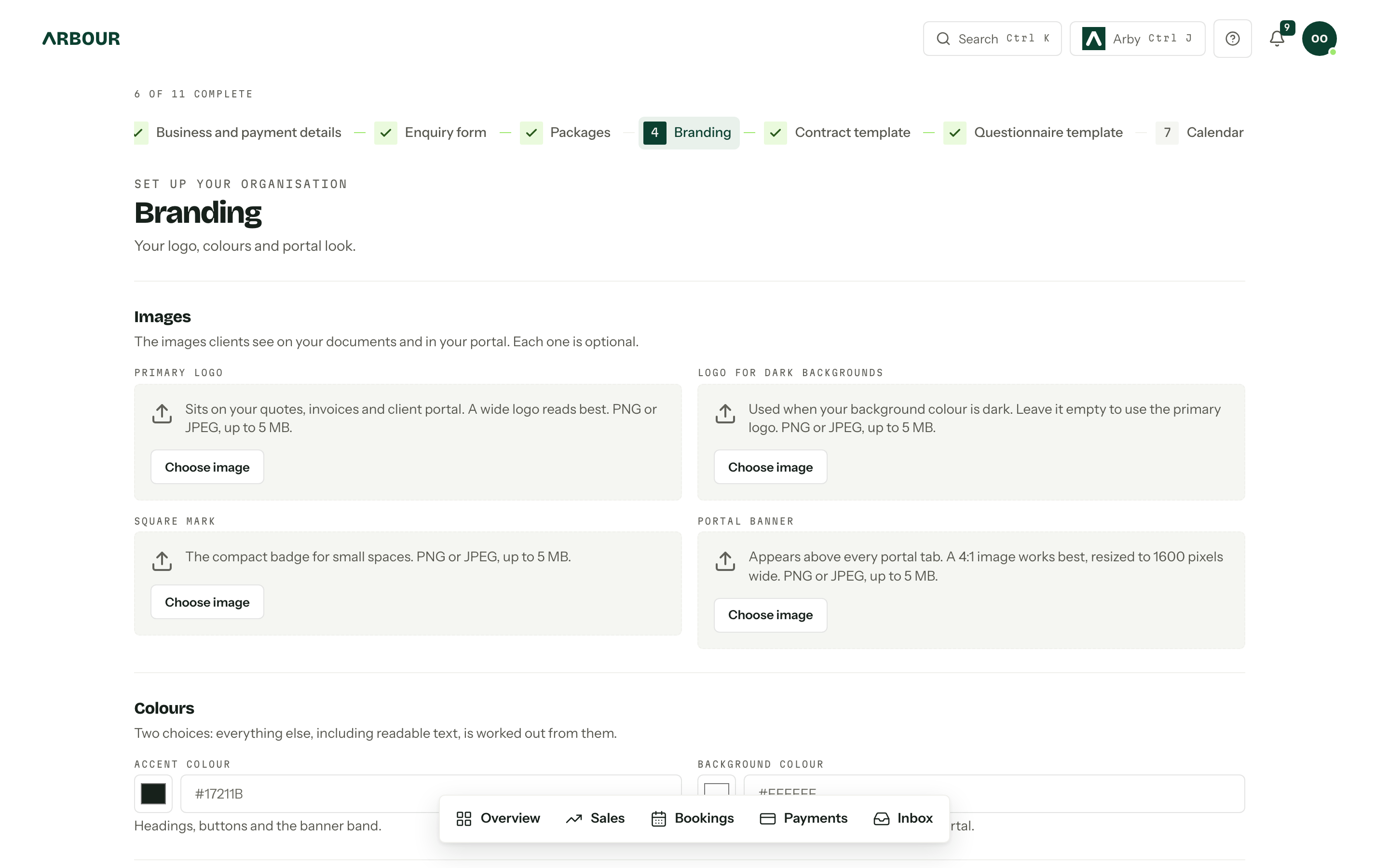
Business and payment details, Enquiry form, Packages, Branding, Contract template, Questionnaire template, Calendar, Custom fields, AI assistant, Accounting. The stepper at the top of every step is the checklist itself: a tick per completed step, a counter on the right. Work them in any order.
Each step is the same body as its settings page, with previous and next at the foot. The last one says Finish setup and drops you back on the overview.
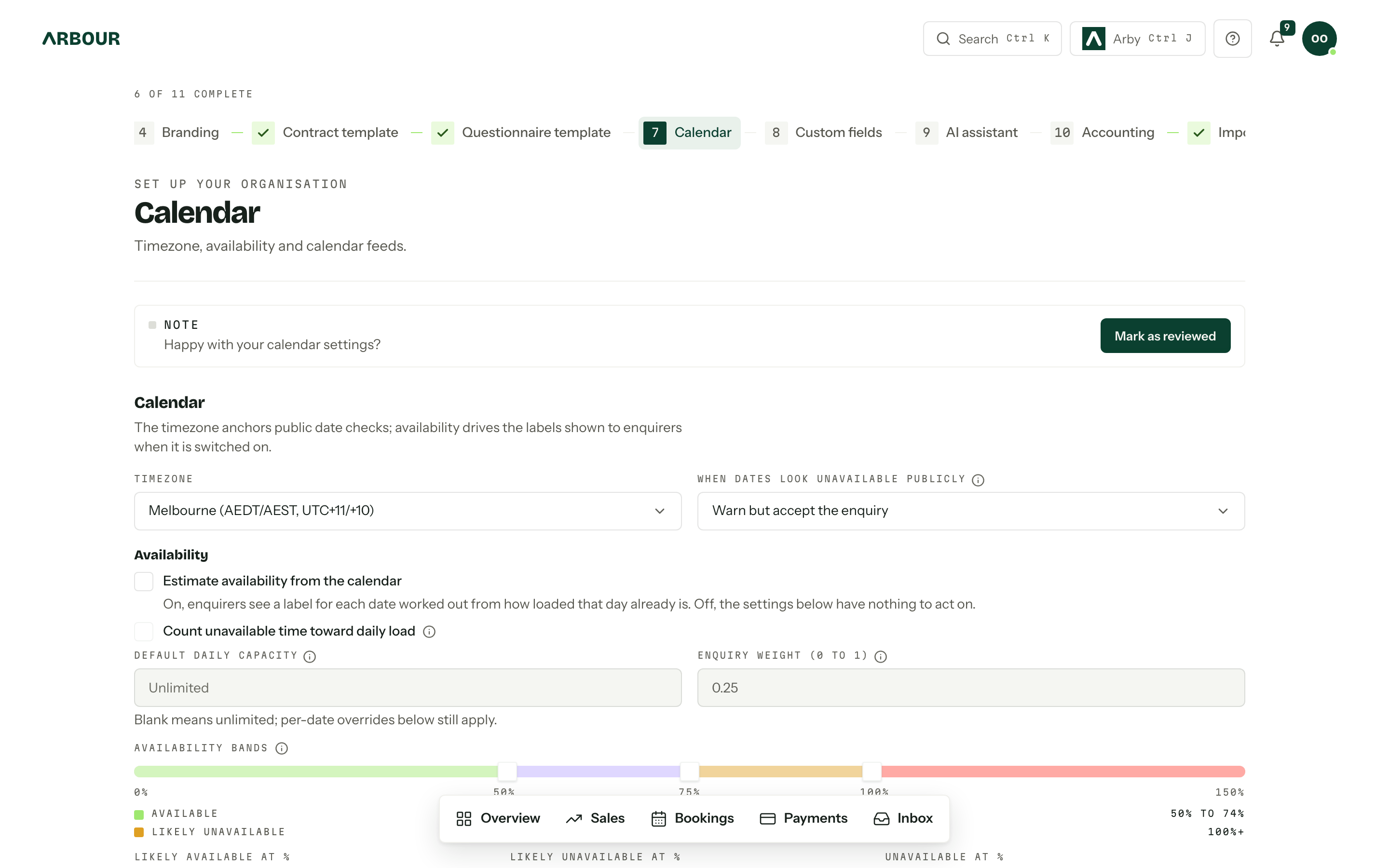
Mark as reviewed
Six of the steps answer themselves. A package exists, so Packages is done. The form is switched on, so Enquiry form is done. They are derived from live data on every read, which also means a step re-opens honestly if the data goes away.
The other four have no data to read, so an owner says when they are settled. Calendar, Custom fields and AI assistant each carry Mark as reviewed. Accounting is either a live connection or Not now, for a business that keeps its books elsewhere.
Dismiss is permanent
Dismiss on the setup card hides the checklist for every owner in this organisation, including future ones, and it cannot be brought back. Leaving it alone costs nothing: it disappears on its own once the last step is done.
Who sees it
The checklist is owners only, in the console and in the API. Anyone else who follows a link to a setup step lands back on the overview. A second organisation gets its own checklist, because the settings behind it are its own.